
You don’t need to learn AI. You need a Friends moment.
A teenager lost her sitcom. I built her a media stack. Two months later I run an AI company. The skill was never AI. The skill was caring about the problem.

Two months ago, my girlfriend’s daughter came to me sad. Netflix had pulled Friends. Friends had been her room-noise — homework on the desk, the boys in the apartment in the background, a constant companion.
I had the answer ready. I had all ten seasons on a hard drive.
“But Anthony, how am I going to watch it on the television?”
That sentence is the only reason I now run an AI company.
The doom loop
I asked Gemini. Gemini was my AI at the time — it could see my Gmail and my Drive, so it felt like the right one. Gemini said: put the files on a server, install Plex on her Samsung, point the TV at the server.
I did not know what a server was.
I had a Mac mini I wasn’t using. I hooked it to the router. I set it up as a headless box for the first time in my life. I bought cables. The episodes started playing. So I pushed it. Can I send 4K to the 65-inch in the living room? Yes. Can I get Atmos? Yes. Can I get the 75-gigabyte Maverick rip with surround sound, unbuffered, with subtitles? Sometimes.
The setup took half an hour per film. The whole month went into codecs, splitters, sampling rates and bit depth. I learned what a Synology was because Gemini told me to buy one. I learned what Infuse was because I needed better rendering on the Apple TV. Every problem solved opened three more.
A doom loop. The good kind.
When Gemini ran out
By the end of the month I was doing a hundred prompts a day and getting worse answers. I downloaded Claude. The first project I made was called Media Server.
Claude understood the villa. It understood what I’d already built. It came back with a recommendation: the *arr stack. Sonarr, Radarr, Prowlarr, file server, Docker, Transmission. Each of those was designed for an IT person. None of them was designed for a marketer.
But Claude was next to me. So the first problem — the one that a month earlier would have stopped me dead — became a different question and a different framing, and we kept going.
How far I got in a day was no longer limited by what I knew. It was limited by how many times I was prepared to say that didn’t work, what now.
Scotty
Eventually I had something running. Manually. I was the orchestrator — I started the torrent, I babysat the queue, I cleared the bad memory, I restarted Docker when the mini ran hot on eight gigs of RAM. The moment I switched off, the system fell over.
Someone — or something — told me about Codex. Codex does code reviews like a senior IT engineer. I sent it my mess. It came back with a system architecture. Eight versions later I had something semi-stable that downloaded, classified, deduplicated and pushed to Plex on its own.
I called it Scotty. Scotty was my first agent.
Three days later Scotty formatted my eight-terabyte disc.
But Scotty was a real thing. A piece of software that did a job, that I had built without knowing I was building it.
Anton Ego’s bite
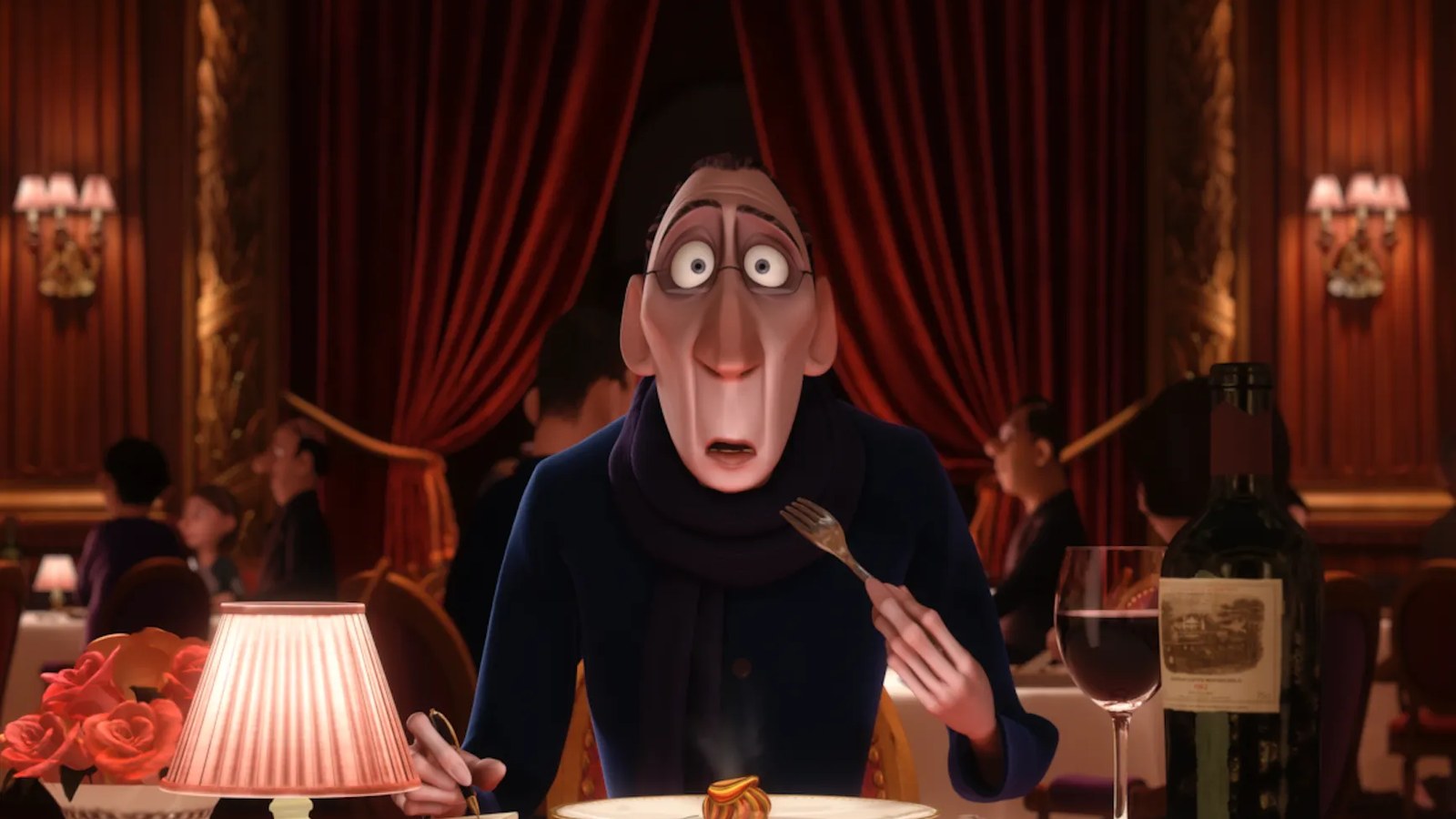
Anton Ego tastes the ratatouille — Ratatouille, Pixar, 2007.
Pixar gave the cynical food critic the only ending that makes the film work. He takes the spoonful. The dining room dissolves. He is six years old in his mother’s kitchen, knee in the dirt. He arrived to destroy the restaurant. He leaves writing the best review of his career.
That is what a Friends moment is. You arrived to do one small thing for someone you love. The thing you ended up building was hiding inside it the whole time.
The actual point
I did not set out to learn AI. I did not buy a course. I did not watch a YouTuber explain what AI was good for. I had a sad teenager and a Mac mini.
If you’ve been waiting for the right moment to start, you’ve misunderstood the assignment. There is no curriculum. The curriculum is the problem you actually care about. AI is the thing on the other side of it.
Find your Friends moment. Someone you love wants a thing. The thing is hard. You don’t know how to do it.
Start there.
Two months in
I now call myself an AI sherpa. Every day I sit with a different person or couple. I share the scars. I ask them two or three questions about where they are with their business. By the end of the conversation we’ve usually found ten problems, and AI has opened ten doors they didn’t know were doors.
The skill isn’t AI. The skill is being prepared, at six o’clock every night, to ask the same dumb question Claude wouldn’t be ashamed of: what am I doing wrong, and how do I do it differently tomorrow.
The first step is to define a problem.
Mine was Friends.
If you have a Friends moment but don’t know what to do next
That’s the conversation. I sit with one person or couple a day, hear the problem, and we map ten doors AI just opened. No deck. No pitch. Forty-five minutes, no charge for the first one.
Talk to Anthony →